
How it started
More than 2 million cases are awaiting trial in Pakistan’s courts, a backlog fueled by judge vacancies and outdated paper-based systems. The delays can go on for years, eroding the public’s trust in the justice system. Studies suggest that when justice moves too slowly, citizens will seek it on their own terms, contributing to increases in conflict and crime.1
In response, Haya Zahid founded Legal Aid Society (LAS) to provide legal guidance and representation to people awaiting trial. “Our model is rooted in the framework of preventive legal empowerment,” she explained. “We believe that with legal literacy and empowerment, you can prevent disputes from happening in the first place.”
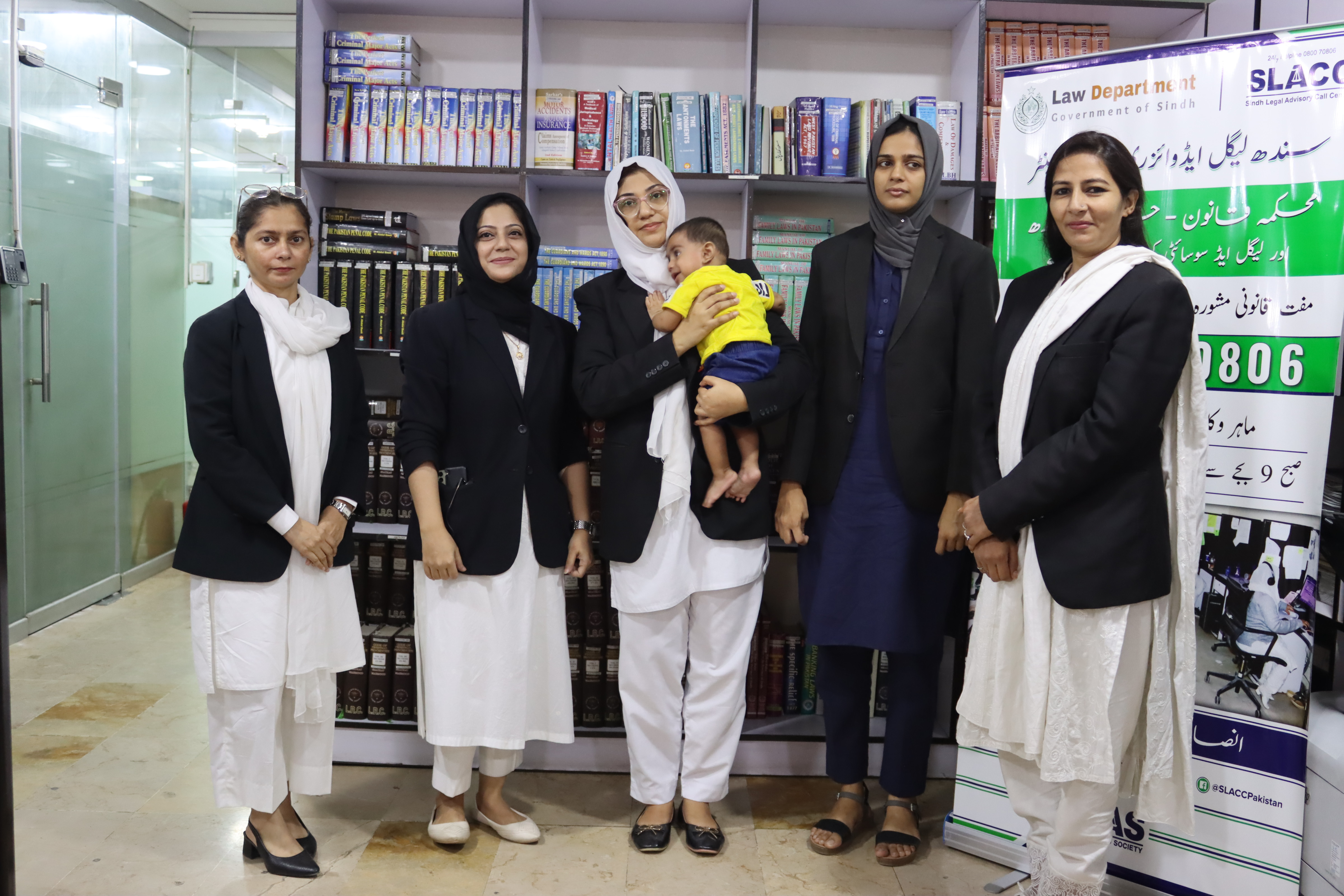
Since 2013, LAS has operated a network of community-based justice hubs that offer paralegal support and mediation services for resolving disputes outside the courtroom. The organization also provides legal representation for vulnerable groups, including women, older people, religious minorities, and people with disabilities, to fight against discriminatory practices.
In its early years, LAS relied largely on foreign aid to sustain its programs. In 2018, after serving thousands of people through its donor-backed initiatives, LAS entered into a formal partnership2 with the provincial government of Sindh, Pakistan. The Sindh Legal Advisory Cell Center (SLACC), which operates as a public-private partnership, has enabled LAS to reach people at a far greater scale with free legal guidance. Haya explained:
“Government systems touch millions of citizens every day (...) If we remained outside of that system, no matter what its flaws are, our reach would be limited.”
1 Noor Ul Ain Tahir. The Endless Wait: Crisis of Backlog in Pakistan’s District Judiciary. Institute for Strategic Studies, Research and Analysis (ISSRA). November 4, 2025.
2 A public-private partnership is a collaboration between government and private entities to finance, build, and operate projects or services for public benefit.
How they partner with the government
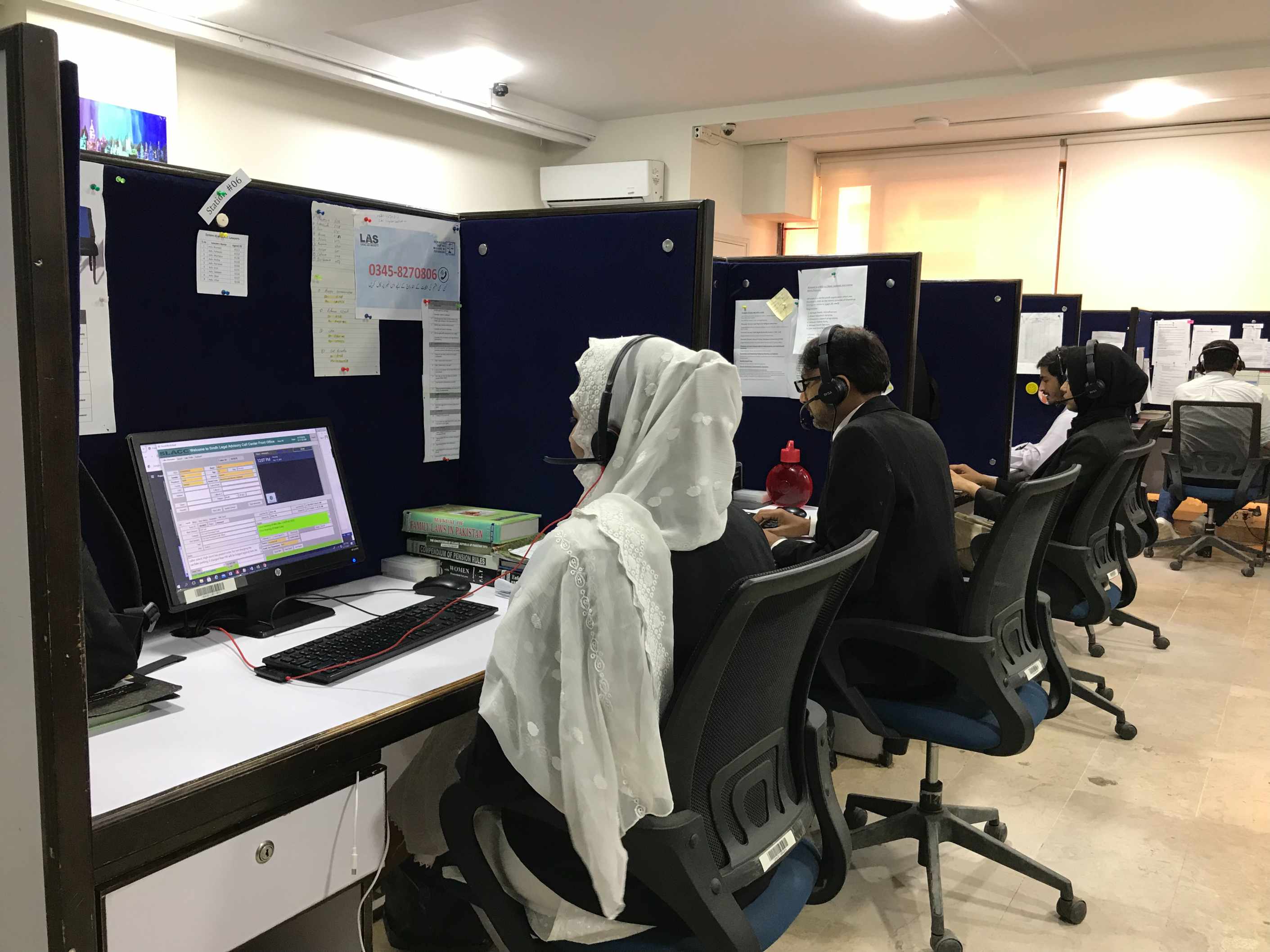
Legal Aid Society (LAS) operates a free helpline, the Sindh Legal Advisory Cell Center (SLACC), that provides multilingual legal guidance for people across Pakistan. The center receives between 3,000 and 5,000 calls each month from citizens who want to understand their rights or resolve everyday disputes outside the courtroom.
SLACC operates as a public-private partnership2 embedded in state systems. The Sindh government funds the helpline and runs it under its own branding, so it is seen as a government service. The rich data from the helpline informs policymaking. “We submit an annual plan with targets,” Haya explained. “We submit quarterly reports to release each tranche of funding, and the government helps us with visibility.”
LAS manages the day-to-day operations, including staffing, technology, and quality control. 12 licensed lawyers answer inquiries through a call center, while retired judges volunteer to review cases and ensure quality. In 2024, LAS released a multilingual chatbot (“NAZ Assist”) to expand access to legal guidance at a much lower cost. The government does not fund the chatbot, but it sits within SLACC and benefits from the visibility and reach the partnership provides.
The helpline is fully funded by the Government of Pakistan’s Sindh Law Department. The partnership has benefits for both LAS and the government:
For LAS, it offers financial stability and an accessible platform to reach citizens nationwide.
For the government, LAS provides valuable insight into citizens’ legal needs. The helpline receives tens of thousands of calls each year, effectively serving as an informal national survey of legal needs.
Insights from the helpline data have shaped administrative and policy reforms, particularly during COVID-19 and after devastating floods in 2022. When the government announced 800,000 PKR in compensation for families who had lost loved ones, many struggled to navigate the process. Haya explained, “We worked with the government to make the process of unlocking the compensation scheme more accessible,” noting how they used the helpline in conjunction with wider interventions.
Partner | Roles | Function | Benefit |
|---|---|---|---|
Legal Aid Society | Operates national helpline | Provides free legal guidance | • Financial stability • Wider reach |
Government | • Provides funding and branding • Embeds LAS in public systems | Informs policymaking | • Data on legal needs • Improved service delivery • Public trust |
How they established the partnership
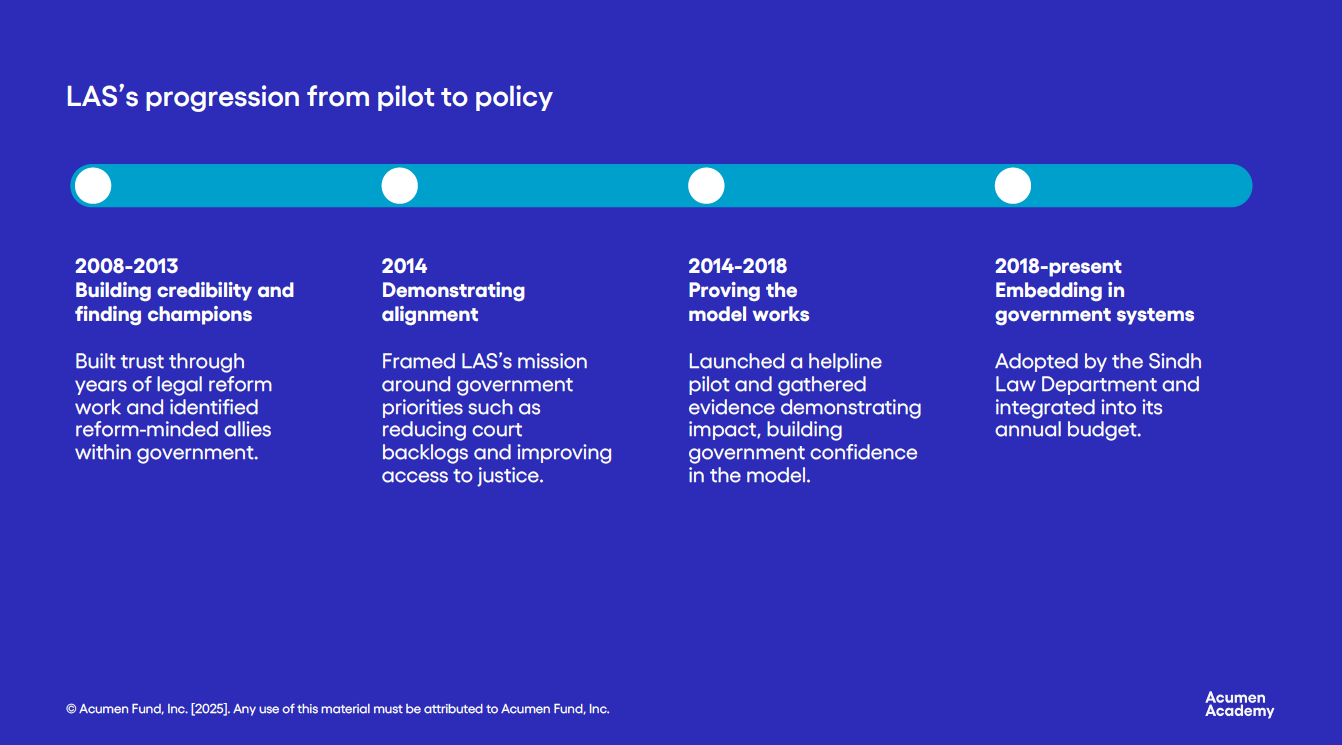
1. Building credibility and finding champions (2008-2013)
The credibility Haya built over nearly two decades of working inside Pakistan’s legal system made the public-private partnership possible. Before founding LAS, she launched a program that now connects 3,000 prisoners with free legal representation every year. The experience helped her understand the system’s constraints and potential for reform.
Haya also learned the importance of timing and finding allies. At the time, one of Pakistan’s youngest politicians took charge of the Sindh Law Department, bringing a “breath of fresh air” who was open to new ideas and ready to support the initiative.
“It’s about being a little street smart and keeping your eye out for the change makers in any government,” Haya added. “Not everyone is receptive to civil society partnerships.”
2. Demonstrating alignment and framing the value for government (2014)
As Haya began developing her helpline idea, she drew on the relationships and system knowledge she had built over the years. “I figured out early on that our government was not interested in rights-based advocacy,” she said.
With that in mind, she approached the government and framed the initiative in terms of its priorities. With 2.6 million cases pending in Pakistan’s courts, LAS’s legal aid services could reduce unnecessary incarceration and prevent small disputes from escalating into lengthy, expensive litigation. Haya positioned the helpline as a way to save money, ease pressure on the courts, and rebuild trust in state institutions.
“The government does want to help,” she explained. “It also wants good publicity and a low-cost, high-impact way to expand access to justice. We were able to show them that.”
3. Proving the model works (2014-2018)
With seed funding from the Foreign, Commonwealth & Development Office (UK government), LAS launched a pilot of the Legal Advisory Call Center3 and spent four years testing and refining their service model. The team collected data showing that the helpline diverted small disputes from courtrooms, preventing costly litigation and saving government resources.
Haya underscored the model’s relevance by showing what could happen without intervention. She warned the government that if no preventative measures were taken, the 2.6 million pending cases in Pakistan’s courts could grow by nearly 80% by 2030. The service’s early results demonstrated that diverting smaller disputes from courtrooms could reduce pressure on the system and support wider reform.
In 2018, as the public-private partnership took shape, the helpline became the Sindh Legal Advisory Call Centre (SLACC), reflecting its shift to joint ownership and governance.
4. Embedding and institutionalizing in government systems (2018)
Following the pilot’s success, the Sindh Law Department formally adopted the helpline and integrated it into its annual budget. Today, the program is embedded in government systems and continues to serve thousands across Pakistan.
3 Legal Aid Society. Story Behind NAZ Assist. Legal Aid Society Pakistan. 2024.
Haya secured government buy-in by aligning LAS’s mission with state priorities, framing justice reform as efficiency and cost savings rather than only advocacy and supporting her case with insights from her work.
How clearly can you explain your value in terms that resonate with government goals?
What data or results could you use to demonstrate alignment and build credibility for collaboration?
Lessons in partnership
Through years of working in partnership with the government, Haya and her team have learned valuable lessons about strengthening relationships, building trust, and staying financially resilient in an uncertain funding landscape.
Navigating political turnover
“With every new law secretary, you have to start from zero,” Haya said. Each change in leadership means rebuilding relationships and demonstrating the helpline’s value all over again. She spends much of her time maintaining those relationships and keeping the program visible.
One of Haya’s most effective strategies is publicly recognising government partners for their role in the helpline’s success. She invites them to international conferences and award ceremonies, where they present the helpline’s success story together. Partners leave with a stronger sense of pride and ownership. LAS also hosts visits to the call center, giving officials a firsthand look at the call center and chatbot in action. “There’s no institutional memory in government,” Haya explained. “That requires human hours and constant engagement.”
Building citizen trust
Although customer confidentiality is a non-negotiable part of LAS’s partnership agreement, many citizens are hesitant to voice complaints when calling a government-branded helpline. Moving from an independent provider to being part of the government can change how some citizens perceive a service, making trust-building even more important.
To encourage openness, the helpline greets callers with an automated message explaining that calls are confidential and that personal data will be anonymized. Lawyers then reiterate this message throughout each call to build trust.
Adapting to shifting government priorities
Haya explained that while government relationships may take longer to establish, they tend to last longer once secured. But state funding is not guaranteed, and as Pakistan repays foreign debt and redirects spending toward climate resilience, nonprofits like LAS must stay aligned with shifting national priorities.
“It’s not that the government doesn’t want to help, it’s just that their priorities shift,” Haya said. “You have to be patient, but you also have to plan ahead. The government moves really slow. You always need a contingency plan for delays, budget gaps, or go-slows. If you don’t have an endowment that can help you cover two, three, four, five months between cycles, you’re out.”
She has learned to track those shifts closely, adjusting LAS’s programs and funding approach while staying true to its mission. For Haya, sustainability means working patiently with government systems while staying ready to adapt when priorities or budgets change.
Haya’s experience shows that maintaining government partnerships is as much about influence as it is about delivery. By sharing recognition, creating visibility for partners, and nurturing champions within shifting administrations, she’s built long-term credibility that keeps LAS relevant even as leadership changes.
How are you cultivating trust and influence within the systems you depend on?
What would it take to make your partners feel genuine ownership of your shared success?

Advice for social entrepreneurs
Partnering with the provincial government of Sindh on the Sindh Legal Advisory Call Center (SLACC) has allowed Legal Aid Society (LAS) to expand access to justice at a national scale. Since 2013, LAS has supported more than 53,000 people through its legal aid clinics and helped nearly 3,000 cases reach resolution through mediation. The national helpline has now responded to over 500,000 calls. With the launch of the new chatbot, the team anticipates that even more citizens will have access to just-in-time legal advice.
For social entrepreneurs who want to establish their own partnerships with governments, Haya shares this advice:
Evidence over advocacy: Success doesn’t come from advocacy alone, but from evidence and alignment. “Don’t argue or get philosophical,” Haya said. “Just show them the data. And adapt to their language.”
Be patient: “I was relentless in my pursuit,” said Haya. In her early days, she thought everything had to happen immediately. That mindset led to burnout. “Now that I look back, I could have been more patient. There should have been sabar - faith that it will all fall into place.”
Are you ready to partner with the government?
Haya offers this quick checklist for social entrepreneurs preparing to work with the public sector, based on her experience as a way to assess their readiness to partner with government:
Do you have trusted relationships with champions inside the government?
Do you have evidence that demonstrates your model’s value?
Are you speaking the government’s language by aligning your goals with its priorities and pain points?
Are you willing to be patient and persistent when developing long-term partnerships?
Are you flexible and ready to adapt to shifting policies, funding, and leadership changes?
Key takeaways
Establish credibility early by demonstrating tangible impact and reliability. Strong proofs of concept builds trust with governments and long-term partners.
Secure adoption by aligning your mission with institutional priorities and framing your solution around systemic efficiency, cost savings, and public value.
Build strong relationships to grow influence, rather than reliance, and stay visible, flexible, and collaborative as priorities and leaders change.