
How it started
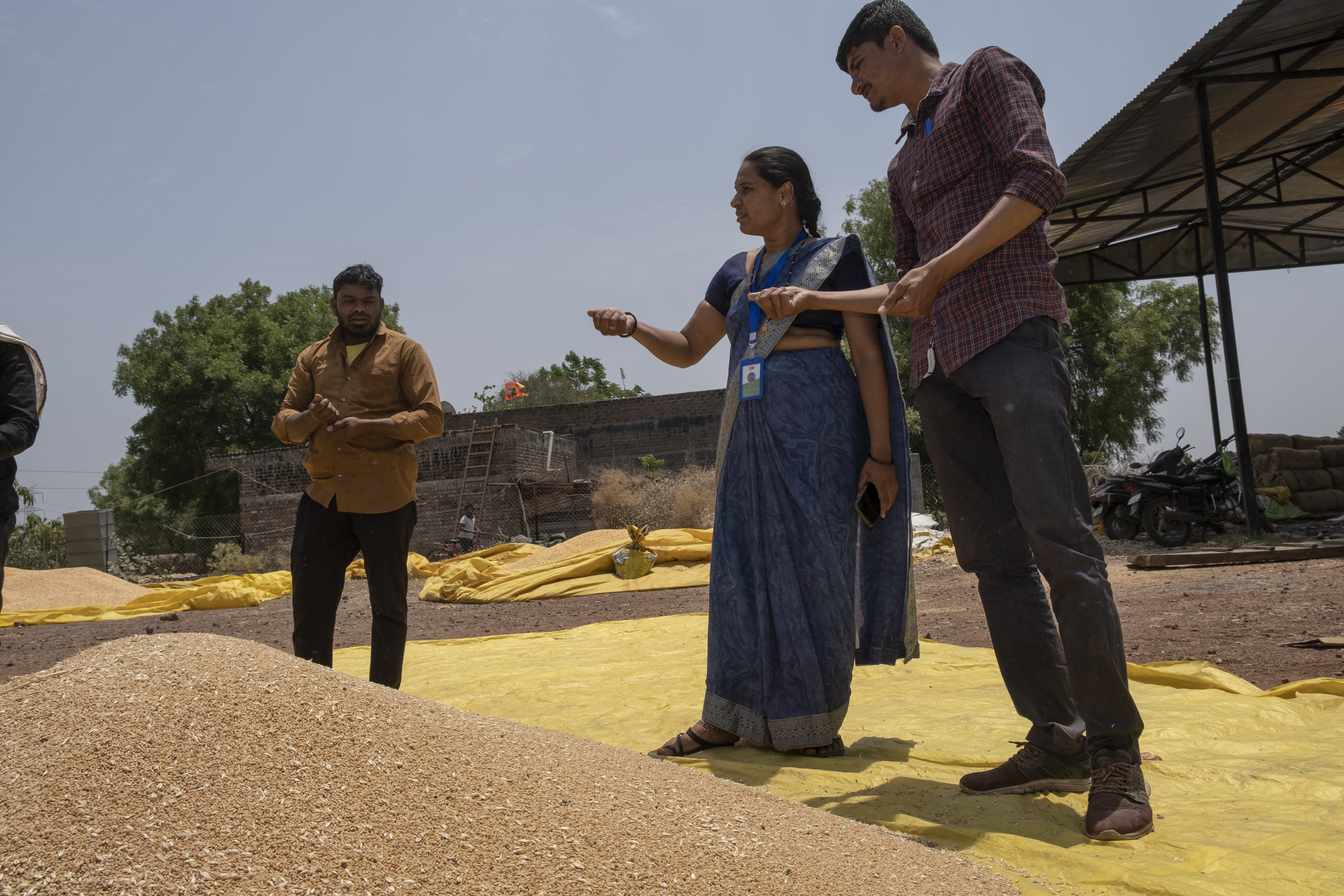
Typically, around one-fifth of any farmers’ crop yield is rejected by buyers because of the way it looks – even though it is safe to eat and has the same nutrients as higher grade produce. For instance, including rejection and spoilage, $14 billion worth of produce in India is wasted each year. According to the Food and Agriculture Organisation of the United Nations, post-harvest losses in fruits and vegetables range between 20 and 44 percent.
These high levels of losses negatively impact food availability, food security, and nutrition. The sharpest impact of this problem is felt by the food producers - smallholder farmers, who as a result struggle to achieve good prices for their perishable crops.
As witnesses to this problem, S4S Technologies co-founders Nidhi Pant and Vaibhav Tidke recall seeing food go to waste in markets as young children living in India. Chemical engineers by trade, they and five other individuals set out to solve the food waste problem.
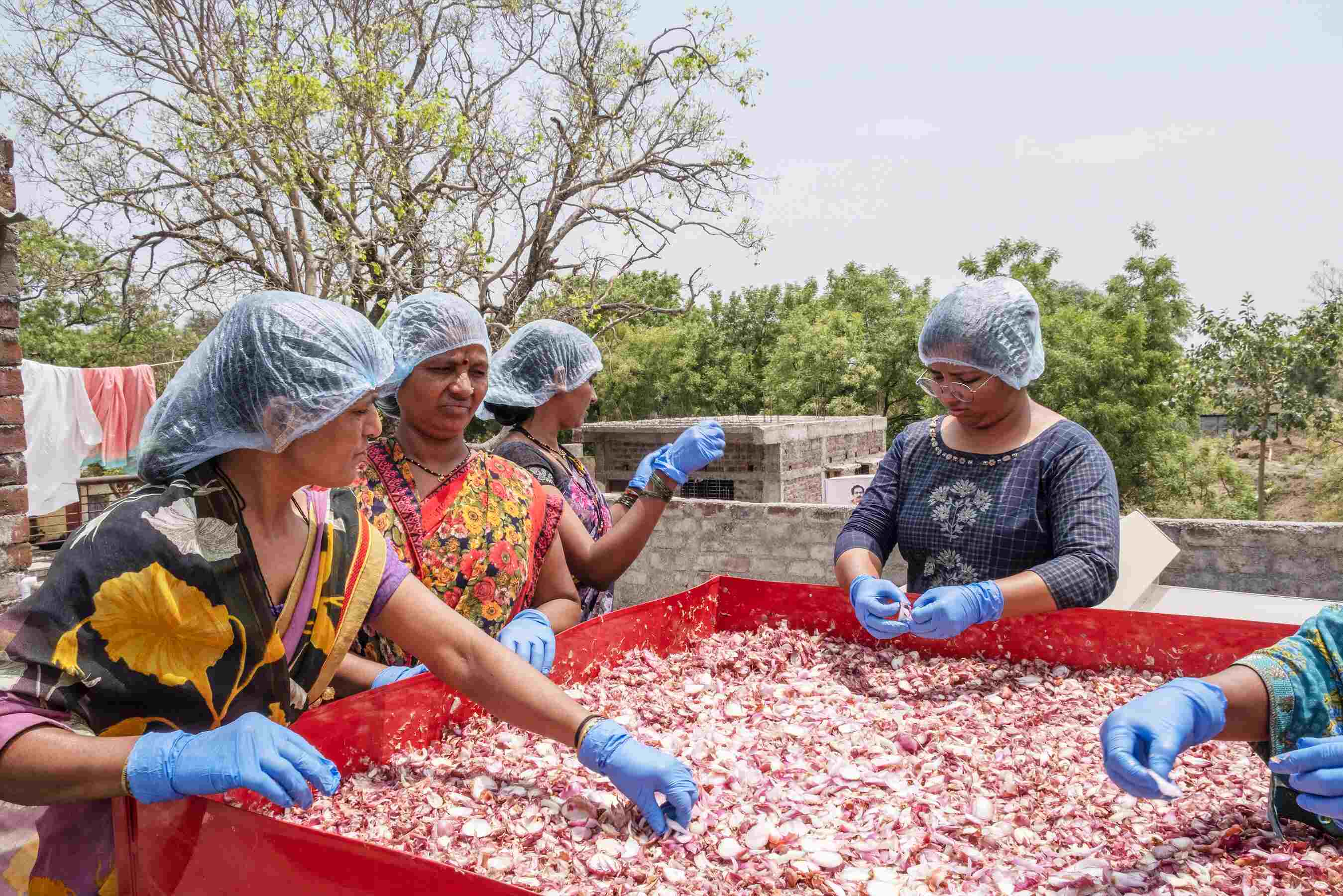
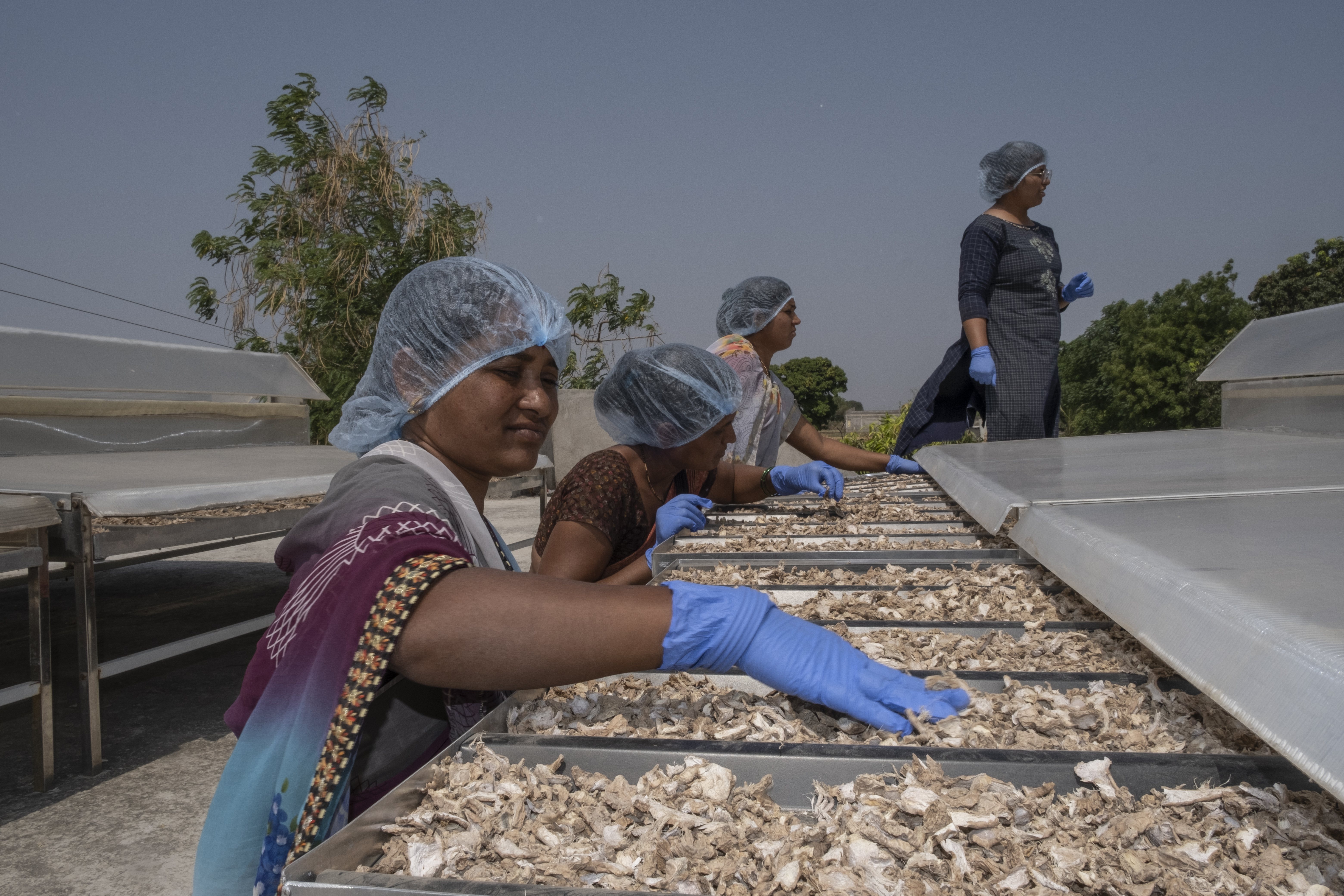
By creating a portable, solar dehydrator that converts unwanted, “ugly” fruits and vegetables into dried products such as spices and powders, Nidhi and Vaibhav identified a solution. Today, their company S4S Technologies helps to reduce food waste and losses for farmers by purchasing their lower-grade rejected produce and bringing it to women entrepreneurs who convert it into dried products - such as ginger powder, onion flakes, turmeric powder, and dehydrated tomato - using S4S’s solar dehydrators. These products are sold to large-scale food companies that benefit from S4S’s reliable, affordable, and quality products.
In less than ten years since its inception, the enterprise has worked with over 91,000 farmers and 4,000 women entrepreneurs, attracted tens of millions in investment, and won the Earthshot Prize in 2023.
The enterprise has evolved and pivoted over time, informed by a deepening understanding of the farmers and rural households they were serving.
“Initially, we started as a company that sold machines to farmers,” Vaibhav said. “But then we realized that farmers could not run the entire ecosystem on their own. They had to do farming, they had to do food processing, they had to do marketing… These were new jobs to them.”
Farmers alone could not run the entire value chain (the process of production from start to end) of farming, harvesting, processing, and taking products to market.
The team then set out on a journey to discover a new value proposition, one that sat at the heart of what the farmers truly needed. They began asking: Who are we really serving? What do they need? And, what kind of value can S4S provide them? What transpired was a journey of customer exploration that reshaped S4S’s value proposition and shifted its business model.
The problem
20-44% of fruits and vegetables are lost post-harvest, impacting food security and smallholder farmers' livelihoods.
High levels of losses negatively impact food availability, food security, and nutrition, including smallholder farmers’ ability to achieve good prices for their perishable crops.
To combat this problem, S4S developed a portable, solar dehydrator to convert “ugly” produce in India into marketable dried products.
What they noticed
After visiting the communities where the farmers using their solar dryers lived and worked, S4S discovered that women of the farming households are the primary users.
They found that the women wanted more accessible income-generating opportunities that didn’t require waking early and traveling far distances. They also wanted additional income to reinvest back into their families and into education.
S4S shifted to serve them - enhancing their solar dryers for ease of use, providing micro financing through bank partnerships, establishing nearby collection centers to ensure steady supply, and creating market linkages by purchasing the dried produce from the women and selling it to large buyers.
Why it matters
Continuous customer discovery and refining value propositions takes time, but they are essential for building business resiliency and long-term impact.
As a result, S4S was recognized with the coveted Earthshot Prize in 2023.
They also recently raised tens of millions in additional investment and continue to support tens of thousands of farmers as well as thousands of women.
Understand customers first
Nidhi, Vaibhavi and their team visited the communities where the farmers using their solar dryers lived and worked. Much to their surprise, they discovered the primary users of the solar-dryers were the women of the farming households who were doing the work of washing, peeling, cutting, and drying the produce.
“We quickly noticed that women were our primary customers, although they were not the decision-makers in the household, they were the ones who did most of the fruit and vegetable handling and washing.”
The S4S team then began asking, how could our solar dryers more intentionally create value for these women and their families? Through customer discovery, the team worked to unpack a clear value proposition that spoke to the needs voiced by these women.
S4S knows that its success hinges on the farmers, who are known as “internal customers” within the agri enterprise.
“We have to be the first option for these farmers and their processing-grade material,” Vaibhav explained. “They are our production houses, right? So we have to keep them happy and motivated. It’s an integral part of the business.”
They made visits to farms and villages and learned that women had a clear desire to improve their livelihoods through accessible income-generating opportunities:
If S4S could provide them with work that didn’t require waking early and traveling far distances, then they could spend more time with their families, leaving spare time for other activities. This would also mean helping them earn additional income, which they could reinvest money back into their families and children’s education.
A value proposition is the main benefit a product or service will provide to their customer or end user, addressing a need, pain, or opportunity they have voiced.
S4S initially set out to serve farmers but discovered their technology provided an income-generating opportunity for rural women so pivoted to focus on serving them.
What do you not know about who is using your product/service and what benefit you are providing them? How might building a deeper understanding strengthen your value proposition?
Re-evaluate value propositions
The S4S team continued listening. Over time, they learned they needed to fill other gaps across the value chain to truly address the needs and pains of their rural stakeholders and they adapted their business model to address four needs within the ecosystem.
“We realized there were other aspects that need to be supported in our business model,” Vaibhav explained. “Those were access to finance, raw materials, market linkages, and then technology. All four of those pieces needed to work together.”
Access to technology: Their solar dryer technology has always been at the heart of S4S’s value proposition. Having learned that women were the primary users, they adapted the product to make the hardware more useful and simple for women farmers.
Access to finance: Rural women in India struggle to get loans from banks, due to a lack of economic power and collateral. To make its dryers affordable, S4S partnered with national and local banks to provide loans to their women farmers, or women micro-entrepreneurs (MEs), to help them finance and pay for the dryer over time.
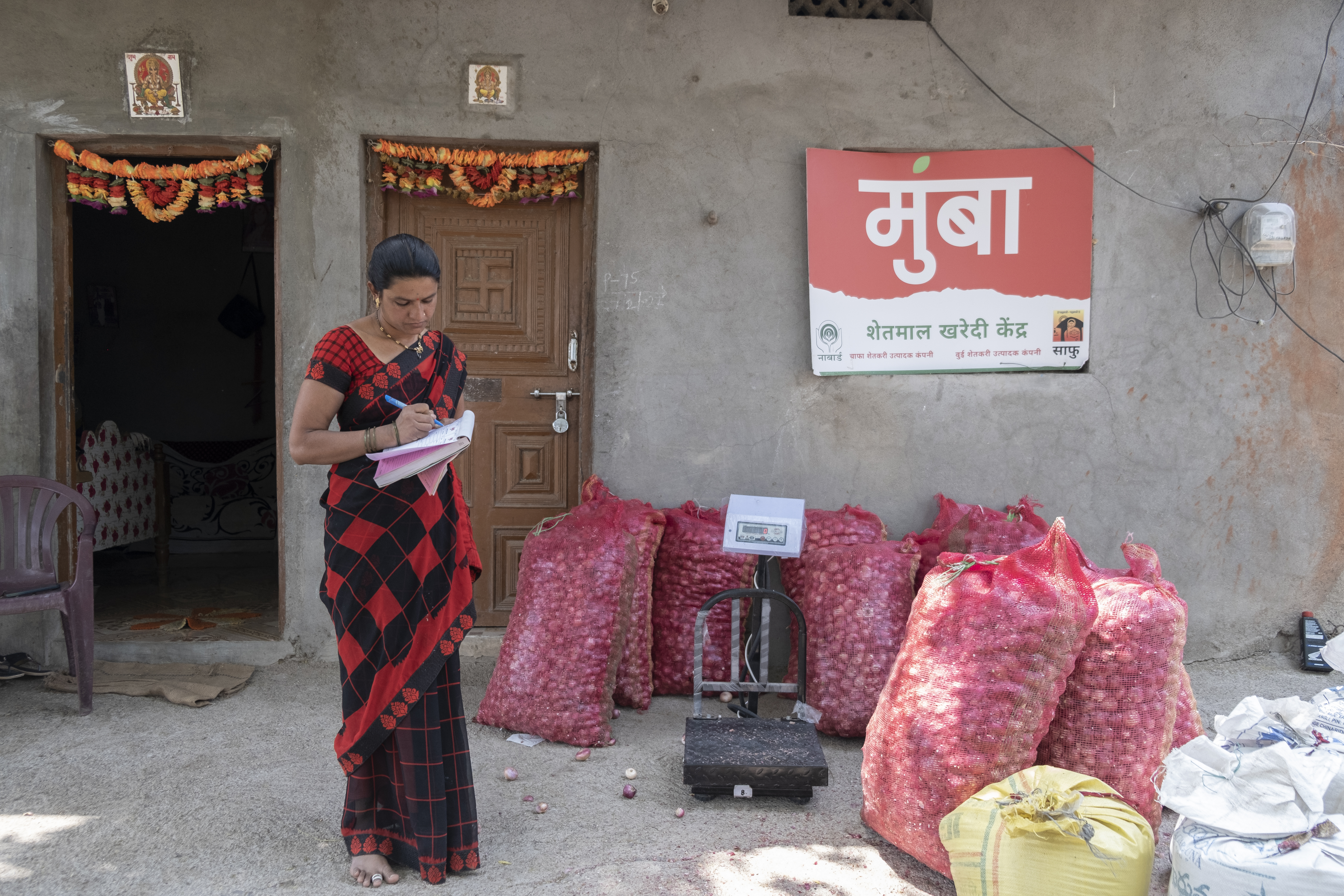
Access to raw materials: S4S discovered MEs were not receiving sufficient produce from farmers to pay off the cost of their dryers, much less make a profit. To solve this challenge they established a network of village-level collection centers within 2 km of farmers, which provided S4S with a competitive advantage to attract more smallholder farmers to supply the women MEs.
Ensure market linkages: To complete the value chain, S4S took on the role of moving produce from their collection centers to the MEs for dehydration, then they purchase the dried produce and sell it to large buyers.
By providing these access points over time, S4S recreated its platform to serve the needs of MEs and provide value across an entire value chain.
Unique value propositions for each customer segment
As S4S began to fill gaps across the value chain and gradually shift its business model, they realized it was possible to have more than one customer type, and therefore more than one value proposition to meet their unique needs or pains.
Crafting a clear value proposition for each customer segment helped S4S build the right strategies that would gain their trust and confidence.
Customer | Need | Value proposition | Strategies to build trust and confidence |
|---|---|---|---|
Women farmers | Improved quality of life | Income-generating opportunity that allows them to provide for their families but also spend time at home | - Establish women as micro-entrepreneurs (MEs) - Provide financing to make the solar dyer more affordable - Ensure steady access to raw materials - Provide linkages to market/buyers for their processed products |
Food producers- Smallholder farmers | A market for unwanted produce | A nearby, reliable buyer of unsold fruits and vegetables | Established a network of village-level collection centers within 2 km of farmers |
Large-scale food companies | Access to healthy dried food products in a convenient, affordable way | A high-quality, affordable food product | - Provide a non-perishable product they can use - Create market linkages to bring inefficiencies down in the value chain and make the product more affordable |
Who are your different customers? What benefits do you offer each group and what is your value proposition for them? With these value propositions in mind, what strategies can you employ to gain each stakeholder’s trust and encourage adoption of your solution?
The S4S of today is radically different from where it started. Initially a group of engineers who offered technology for smallholder farmers to prevent food waste, the company is now managing last-mile logistics, creating value, and building long-term relationships with customers across an entire value chain.
“We are at a point where, apart from dehydrating fruits and vegetables, we are becoming a complete food processing platform,” Vaibhav explained. “We’ll start adding new products and technologies to our work with micro-food processing partners. As we fine-tune our story, you will see us expand into other dimensions as well. This is a continuous journey.”
S4S Technologies is part of Acumen's investment portfolio, which focuses on helping social enterprises grow from seed to scale. Nidhi Pant is an India Acumen Fellow.
Key takeaways
Defining a value proposition takes time and requires actively listening to your customers. You will go through multiple iterations to arrive at what your value proposition really is.
Your value proposition should be revisited periodically. It may change over time based on changes in the market or through an evolving understanding of how your customer/user engages with your solution.
The true value of your solution may be different for different customer groups. By customizing your value proposition to your different target customers, you can build strategies to gain their trust and increase adoption.