

How it started
In Rajasthan, India, tens of millions of households rely on dangerous and inefficient kerosene lanterns to light their homes. Although better clean energy solutions exist, the country’s infrastructure limits these products from being distributed to rural families who need them most.
Ajaita Shah founded Frontier Markets in 2011 to bring affordable energy products to India’s rural communities through a vast distribution network that reaches this underserved market. “We believe that rural households are dignified customers,” said Ajaita Shah, founder of Frontier Markets. “They deserve the best quality of services and solutions to ensure their prosperity and safety.”
The company collaborates with last-mile sales agents and local brick-and-mortar stores to provide energy solutions—such as solar home lighting, solar lanterns, solar fans, and clean cookstoves—along with other products and services tailored to the needs of rural customers.
In its earliest years, Frontier Markets’ assumed that its users were men, given that their sales agents and paying customers were predominantly men. This was consistent with the cultural norms in the conservative state of Rajasthan, where the company operated. However, as the business grew, Frontier Markets turned their attention to listening to and learning more about who their customers were. Through data collection and customer interviews, Frontier Markets discovered that, contrary to their assumptions, 70% of users were women, who also held significant influence over household purchasing decisions.
These new insights led Ajaita and her team to completely transform Frontier Markets’ business model. They pivoted to better meet the needs of the women who used the products, the outcome of which led to increased sales, new revenue streams, and a greater business and social impact.
The problem
In Rajasthan, India, millions of households lack access to clean energy solutions due to poor infrastructure, relying on unsafe kerosene lanterns to light their homes.
→ Frontier Markets provides affordable, clean energy products and other essential services to rural communities in India through a network of last-mile sales agents and brick-and-mortar locations.
What they discovered
Frontier Markets initially assumed men were the primary users of their products. Through customer insights and data collection, they discovered that 70% of their users were women, who also had significant influence over household purchases.
→ This revelation led them to revamp their business model, focusing on women as both customers and sales agents, which unlocked new revenue streams and increased social impact.
Why it matters
By listening to their customers, Frontier Markets not only improved their product offerings but also created a profitable, scalable business model that empowers rural women.
This approach highlights the importance of understanding end-users, taking gender-based approaches, and adapting business strategies to meet their needs.
Frontier Markets' discovery led to a transformed business model focused on women, empowering rural women through income opportunities, creating new revenue streams, and enhancing both sales and social impact.
Making data-driven decisions
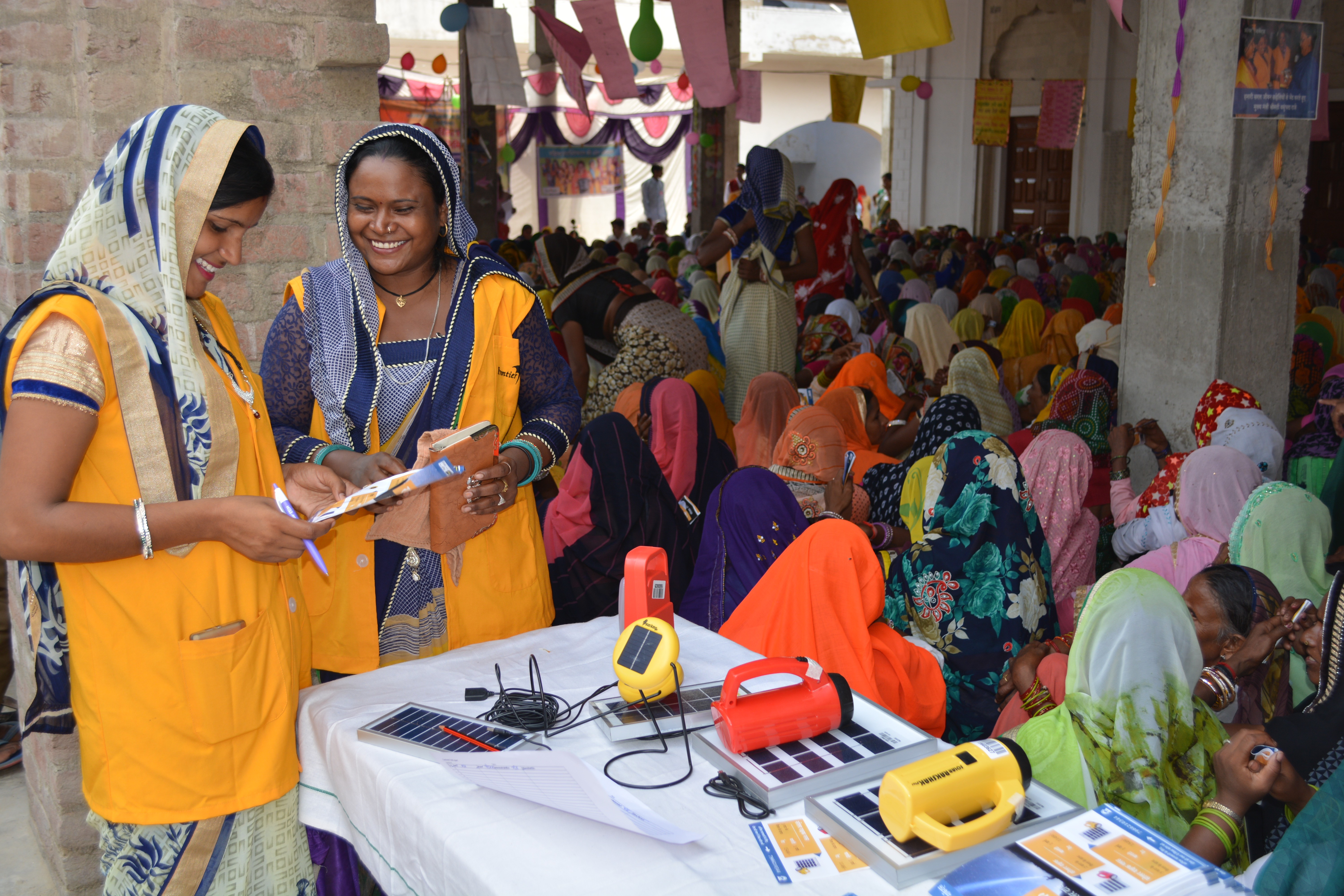
For almost 5 years, Ajaita and her team worked on getting Frontier Markets’ business model and strategies off the ground and did not consider gender lens from a user’s standpoint.
However, as the company grew and attracted investment, the team turned its focus to measuring the impact of the clean energy solutions it distributed on users. They collaborated with 60 Decibels, an impact measurement company that uses a Lean Data approach, to listen directly to customers.
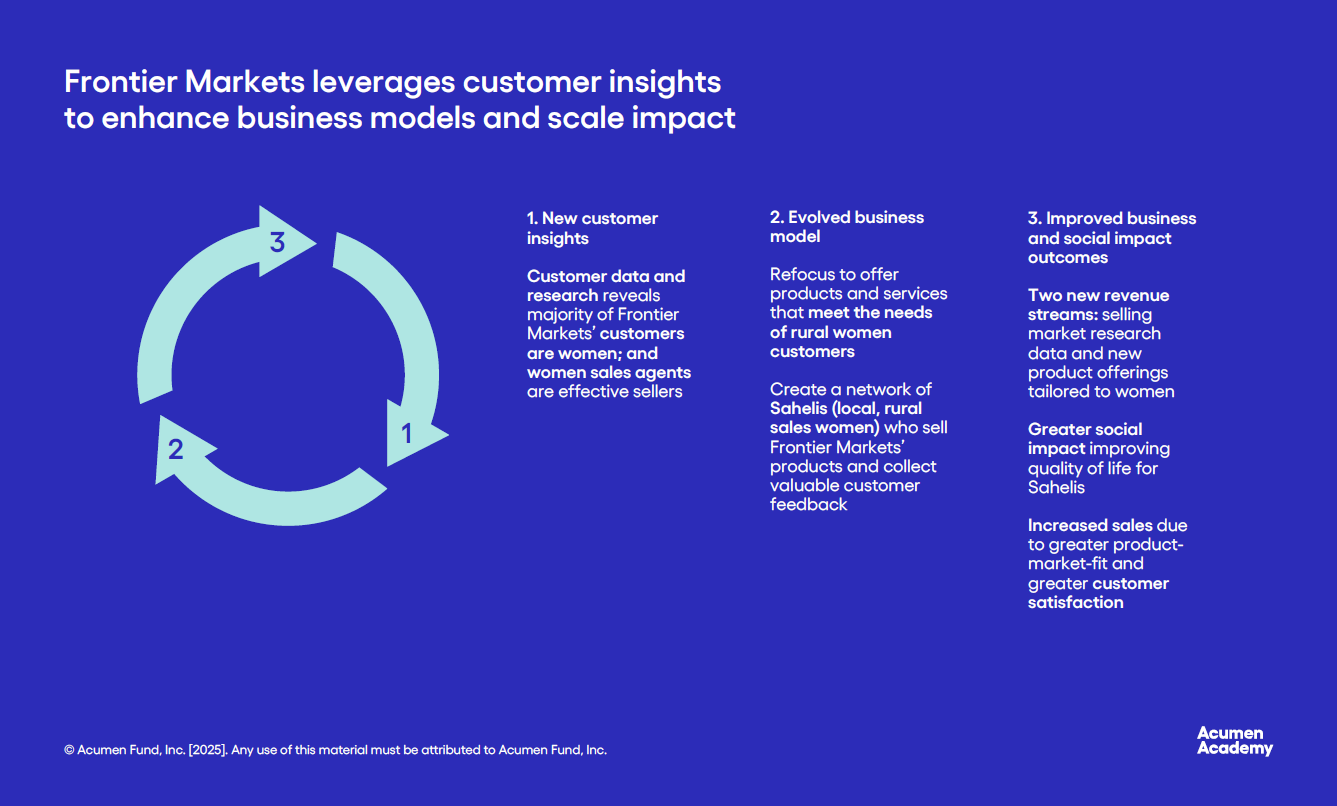
Conducting this listening and customer research was eye-opening. The team previously had no idea that 70% of their users were women and this revelation led to a series of decisions that would transform the business. Taking a gender lens also benefited their sales strategy, they discovered, women agents were fantastic communicators who could enter a neighbor’s home without seeming threatening — and they were skilled at collecting and contextualizing customer data.
“It made us realize we were missing out on an opportunity to refine our business model and better understand the role that women play,” says Ajaita.
“We decided to consciously start working with women as agents because it was a smart business decision.”
Frontier Markets discovered that the paying customer and the end user of their products were not always the same individuals.
How might you gather data and insights to develop a deeper understanding of your end-users’ preferences and needs? How might this influence your business model?
Unlocking new revenue streams
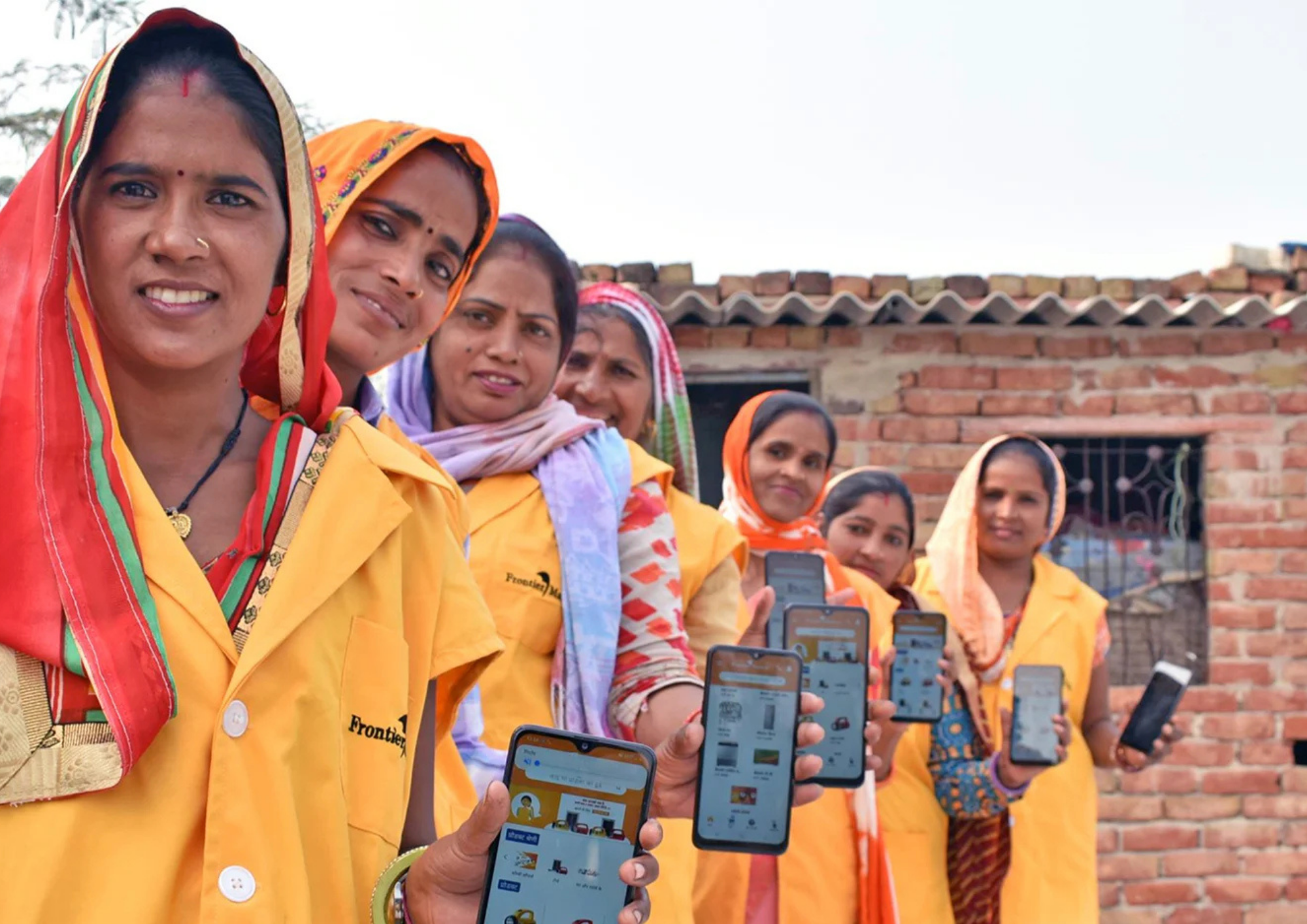
Recognizing the role that women play in household purchasing decisions and the untapped potential in catering to them, Frontier Markets established a network of female sales agents known as “Sahelis” and expanded the company’s list of products and services to better meet the needs of women customers.
Leveraging their trust, positions of influence, and reach within their rural communities, Sahelis effectively showcased and communicated Frontier Markets’ expanded variety of products, and helped women customers make purchases.
Frontier Markets also re-imagined its operating model to create a continuous customer feedback loop: While visiting customers, Sahelis collected valuable end-user information such as customer and user needs and product feedback. Ajaita and her team then leveraged those insights to make more informed business decisions that better served women customers.
This approach helped Frontier Markets gain a greater understanding of customers’ needs and unlocked two new revenue streams:
New product offerings tailored to women customers: with the insights gathered from Sahelis, Frontier Markets began selling new products and services for rural women customers, such as a discrete subscription service for sanitary napkins and a doorstep delivery service for cattle feed. These services addressed specific challenges faced by their women customers, further strengthening the company's market position and product relevance.
New revenue stream from user data, insights and advertising: Ajaita and her team realized that the market research and sales data Sahelis were collecting were valuable to corporates, governments and social innovators. Frontier Markets began earning revenue for these insights through service contracts, unlocking an additional revenue stream for the enterprise.
Similar to Frontier Markets’ continuous feedback loop, what systems can you establish within your operating model to continually listen to and understand your customers' needs, behaviors, and pain points in order to provide better solutions that meet their needs? How might your business shift as a result?
Creating greater scale and impact
If Frontier Markets had not challenged the status quo, and only collected data from its paying (usually male) customers, their valuable customer insights would not have been leveraged. By focusing on the end -users and unlocking the data and relationships from its network of Sahelis, Frontier Markets was able to increase sales, enhance social impact, and improve customer satisfaction. Ajaita explains:
“If you bridge the gap by connecting the rural customer with the right products, services, and solutions through data, it is a massive market opportunity (...) More importantly, it makes a huge impact in addressing the rural customers’ needs and challenges.”
Frontier Markets has a 95% retention rate and 80% active rate for its Sahelis, underscoring how business performance and social impact can go hand in hand.
Today, Sahelis consistently earn four times the income working with Frontier Markets compared to any other similar program in the country. They are able to finally contribute to their family in a significant way, and have a new sense of agency and empowerment.

Evolving with customers
Frontier Markets became the first energy-access company to break financially even in 2017 and today is a profitable social enterprise. In recognition of its success as an income-generating opportunity for rural women, the company now has government contracts to further scale its work.
After more than a decade in operation, Frontier Markets has built a sophisticated network of over 35,000 sales agents (including small women businesses). These agents have successfully boosted their incomes and sold products and services worth US$150 million across various sectors including banking services, agriculture, healthcare, consumer electronics, and more. Frontier Markets and its agents have served over 4 million rural customers—more than 70% of whom are women—across 5,000 villages in three states in India. Their story is a testament to how leveraging customer insights can tremendously enhance an organization’s performance and impact.
→ Frontier Markets is part of Acumen's investment portfolio, which focuses on helping social enterprises grow from seed to scale.
Key takeaways
Your business model and product offering should respond to the market and continuously evolve according to insights from end users.
Understand and respect the local cultural and social dynamics of your customers and adjust your business strategies accordingly.
Create continuous feedback loops with your customer to understand their needs, behaviors, and pain points, then pivot and adapt your business strategies based on these insights to unlock new opportunities.
Consider possible markets for the by-products of your model (e.g. Frontier Markets was able to monetize the data they were collecting as they appreciated how it could benefit corporations and government, creating new revenue streams).