
How it started
According to research by the Aga Khan University, 70% of Kenyan youth aged 18 to 35 believe they have the power to make a difference in Kenyan politics and democracy1, yet they sit at the periphery of the nation’s policy and decision-making processes. Caren Wakoli recognized the urgency to involve young people in Africa’s decision-making spaces, believing that responsive leadership and meaningful participation are essential for sustainable development in the region.
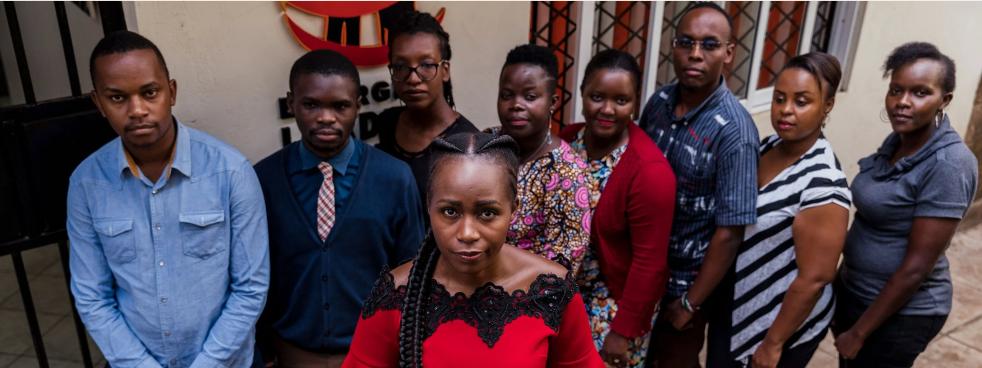
In 2012 she founded the nonprofit Emerging Leaders Foundation (ELF) to make this belief a reality. ELF’s leadership program empowers, supports, and accompanies young individuals to achieve meaningful, dignified, and impactful participation in society by providing them with transformative leadership skills and job readiness to transition and thrive in the workforce.
In 2015, Caren made concerted efforts to shift ELF from a self-funded initiative to a philanthropy-backed nonprofit with diverse partners and ambitions to scale throughout East Africa. Despite her bright vision for Africa’s future, her fundraising journey was not straightforward.
“At the beginning of that year, we sent out over 60 proposals and concept notes to different organizations. Out of the 60, we received only about 10 responses. Of course, all of them were ‘no.’”
Before securing donations, Caren self-funded ELF. She took a paying job elsewhere and used that income to fund the organization’s early activities, paying stipends and transportation costs for volunteers — and forgoing a salary for herself.
It took some years of active fundraising until Caren finally landed her first institutional funder. Through a long and painstaking journey, she learned that fundraising takes time, persistence, and a willingness to adapt. To achieve success, she had to be proactive, build upon feedback, and learn that even unsuccessful pitches can lead to new relationships and opportunities.
1 The Aga Khan University East Africa Institute. The Kenya Youth Survey Report 2016. 2016. © The Aga Khan University, 2024 https://www.aku.edu/eai/Pages/kenya.aspx

The problem
In Kenya, young people are eager to participate in shaping their country’s future, but they are often excluded from key decision-making processes. Caren Wakoli saw the need for youth to be active in leadership for Africa’s sustainable development.
70% of Kenyan youth (18-35) believe they can make a difference in politics, but they remain on the sidelines.
Caren realized that involving young people in leadership and decision-making is crucial for long-term growth, but fundraising as a nonprofit to serve young Kenyans was proving to be challenging work.
What they learned
Through years of hard work and rejection, Caren discovered that fundraising success comes from persistence, adaptability, and relationship-building.
Successful fundraising requires time, persistence, and the ability to learn from every experience. Caren learned the importance of refining their value proposition, investing in relationships, and working through many rejections to improve their approach.
Why it matters
Caren’s journey offers valuable lessons for anyone aiming to create lasting change through nonprofit work. Her experience shows the importance of resilience and turning challenges into opportunities. → Caren’s perseverance and resilience turned ELF into a thriving nonprofit empowering Kenyan youth. Her story offers valuable lessons for anyone aiming to create lasting change through nonprofit work.
Caren’s Fundraising Playbook: Lessons from the Journey
Challenges | How they did it |
|---|---|
When a pitch doesn’t lead to funding, you don’t often know what could be improved | Proactively seek to understand why you were rejected and adapt your pitch and strategy based on what you discover Lesson 1: Proactively refine your pitch |
Fundraising efforts are leading nowhere | Even unsuccessful pitches, meetings, or encounters can be valuable for building relationships and future opportunities Lesson 2: Turn funder feedback into action Lesson 3: Build authentic relationships Lesson 4: Leverage partnerships to reach funders |
It’s demoralizing when funders want to see impact, but you’re just getting started and need their support to get there | Fundraising requires persistence and determination Lesson 5: Start where you are and with what you have Lesson 6: Embrace failure |
Caren received many fundraising rejections with often little feedback. When she did receive feedback, it felt like more of the same, “ELF’s budget was too small, they had no impact to demonstrate, or their timing wasn’t right.” Frustrated, Caren became more proactive. She reflected on reasons why she may have been rejected, and continuously adapted her pitch based on the discoveries she was making.
One of her greatest “aha” moments came after almost five years of rejection, when she learned about value propositions through the Acumen Fellowship. She was often told ELF’s impact was too small, but soon realized she hadn’t been pitching their value proposition the right way.
“Initially, we were going out and telling funders, ‘This is what we do, this is what we’re good at.’ But we weren’t identifying the need in the market. We weren’t explaining what young people in Kenya needed and how ELF had the tools, skills, and expertise to address those needs.”
Following this realization, Caren and her team got to work revising their pitch. They looked at their value proposition and identified the need they were working to address by focusing more on the problem and how their solution made an impact. The pitch immediately became more compelling. They found a clearer niche in the market, and from then on, began to tell that story.
On one occasion, Caren met, pitched, and secured funding from a Kenyan organization providing grants to help nonprofits improve their media presence. The feedback Caren received when speaking with this funder was equally as valuable as the funding she was given.
“The funder told me, ‘I see why you have struggled for so long. You've been sending proposals but taking less time to actually nurture relationships with the individuals in those institutions. Start taking time to attend networking events and meet people for coffee, even though it isn’t your personality type.’”
One way Caren converted this feedback into action was to invite prospective donors to ELF’s graduation ceremonies to celebrate their program alumni:
“We invite people who may not yet be funding us, but who have a connection to our work. We want them to see the ‘product,’ and then one day, they might make the decision to work with us.”
More significantly, this feedback taught Caren the importance of “turning my network into ELF’s net worth, building relationships, and doing my own research on potential partnerships with corporations and governments,” which became instrumental when she embarked on her next stage of fundraising: partnering with government and other nonprofits.
Caren recalls the time she sent out over 60 funding proposals and concept notes to various organizations and individuals and received no positive responses, and how during her time in the Acumen Fellowship she met other social entrepreneurs who were facing a similar challenge. Caren began to ask herself, what can I start to do differently?
This sparked her realization that, by submitting dozens of proposals at a time, she was going about it all wrong. It struck her that maybe fundraising was not about raising money, but raising relationships.
“I wanted to know, how do you build authentic relationships? How do you let a funder know that you’re not just interested in their funding, but in working together on a solution? That you’re interested in them, not just the money?”
As her work gained recognition, Caren soon landed an opportunity to meet with the Ford Foundation — her first meeting with a large philanthropic foundation. However, instead of going in to ask for funds, she approached the conversation differently. She researched the organization to learn deeply about their programs and look for shared goals. Even after the meeting, she kept the conversation going — creating several opportunities for them to stay engaged and updated about ELF’s work.
Eventually, the Ford Foundation became the first institutional funder of ELF and is their largest funder to this day. This success taught Caren that the first meeting with a funder is most valuable if you set the intention to make connections, and not secure funding. This allows meaningful relationships to be established and cultivated, leaving new and often greater opportunities to arise as a result.
From then on, every pitch and every meeting became not just about seeking funds, but primarily about cultivating meaningful associations and engagements.
A continued focus on networking and relationship building led Caren into a new stage of growth and a catalytic partnership between the Kenyan government and Emerging Public Leaders, a reputable nonprofit based in Washington, D.C. Together, they worked to create a new public service fellowship for young people in Kenya, which today is a successful program with two graduated cohorts.
Caren put into practice all she had learned about building connections up to that point, and leveraged this partnership to help her seek funding for the program. Many of her fundraising meetings came from the network of Emerging Public Leaders’ Executive Director, who connected Caren with potential donors by email before her visits.
“Having someone who can introduce you to a potential donor and share advice beforehand is a key part of the process.”
“Together, we visited organizations to learn whether they would be interested in financing the public service fellowship program. Many of them said to me, ‘If you're working with the government and Emerging Public Leaders, then we are willing to put in money. We have seen their track record over the years and we know there will be impact.’”
After years of doubt, failure, and rejection, Caren is now a successful fundraiser. But she vividly remembers that prior to achieving any sort of success, she struggled with a challenge many organizations embarking on their fundraising journey often face. Funders often want to see proof of impact, but if one is just getting started, how might they demonstrate impact without first having the funds needed to help you get there?
While this frustrated her for a while, Caren eventually learned that the best way to solve this was to start with where she was and with what she had. She began by going to a park in Nairobi and providing leadership sessions for free to build up her experience and capture first-hand evidence of impact, albeit at a smaller scale.
“It's better to start small, have those little wins, and share the stories of the people you're working with. I have come to learn how important it is to document stories of impact — even any slight change in the people you’re working with. It goes a long way toward showing there is evidence that your model works, or that you need to change the model. People want to invest where they see impact.”
In addition to learning to start with what she had, Caren also learned to embrace failure. When she first started fundraising, Caren was afraid of failing. But as she kept moving from failure to failure, rejection to rejection, she learned to embrace the negative emotions and found positive ways to channel them.
She learned to walk into fundraising with a healthy self-esteem and authentically own her story. Whenever she received a rejected proposal, pitch, or idea, rather than make the rejection about her shortcomings, she reflected on it and reframed it into a learning:
“a no isn’t a rejection, it’s a redirection.”
She also learned to bring her team along for the ride. Rather than carry the emotional burden of failing on her own, she found ways to bring the team together, collectively experiencing and supporting each other in both good and bad moments.
Today, one of ELF’s mantras is:
“We are learning to fail early, fail fast, and fail better.”
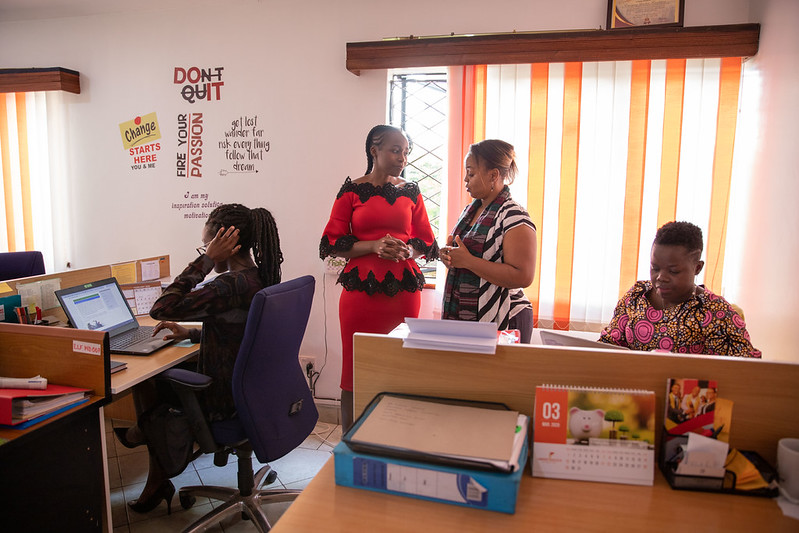
Caren’s evolution from a small self-funded organization to successfully securing multinational partners is an inspiration for those who see themselves in her shoes. Fundraising is hard, but it is not impossible. Rejections are quite common; but what matters most is how you respond to them, as Caren’s story shows.
Today, ELF’s funding model is diverse and sustainable and includes grants, funds from consulting and program fees, and individual contributions. To date, the organization has trained over 3,000 young people who have in turn reached another 200,000 young people across the continent.
Caren Wakoli is an East Africa Fellow.
What are you doing to constantly improve your fundraising pitch and to refine your value proposition?
How are you approaching feedback, rejection, or positive outcomes?
What frameworks or "playbook" are you devising to capture what you're learning?
How are you implementing what you’ve learned? What are you doing to hold yourself accountable?
Key takeaways
Fundraising takes time, and requires persistence and determination.
Following unsuccessful fundraising efforts, you must proactively seek to understand why you were rejected and adapt your pitch and strategy based on what they discover.
Even unsuccessful pitches or meetings can be valuable for building relationships and future opportunities.
It is vital to embrace failure, and channel negative feelings towards learning opportunities for fundraising.